what is memory card?
Apr 04, 2023
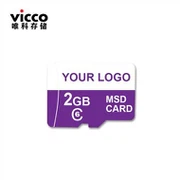
SD card memory card is used for mobile phones, digital cameras, portable computers, MP3 and other digital products on the independent storage medium, generally in the form of cards, so collectively referred to as "memory card", also known as "digital memory card", "digital memory card", "storage card", etc.
MMC series
MMC
Due to the large size of the traditional CF Card, Infineon and SanDisk introduced a new memory card product called MultiMedia Card (MMC card for short) in 1997. The dimensions of the MMC card are 32mm x 24mm x 1.4mm. It adopts a 7-pin interface and does not have a read/write protection switch. Mainly used in digital cameras, mobile phones (such as Siemens MP3, mobile phone 6688), and some PDA products.
RS-MMC
It is a memory card designed for multimedia products such as mobile phones introduced by the MMC Association in 2002. Much smaller than the MMC, the RS-MMC can be converted to a standard MMC card with a dedicated adapter.
MMC PLUS
In September 2004, the MMC Association launched MMC PLUS and MMC moboile. The MMC PLUS card is the same size as the regular MMC card and has faster reading speed. Several factories have also introduced low-voltage MMC PLUS.
MMC moboile
In order to achieve better power-saving performance, the MMC Association introduced the memory card MMC moboile, which can not only work at low voltage but also compatible with the original RS-MMC. It can work at 1.65-1.95V and 2.7-3.6V voltage modes, with theoretical transmission speed up to 52MB/s. It's called dual voltage RS-MMC. The MMC moboile is exactly the same size as the RS-MMC card, with the biggest difference being that the MMC moboile has 13 gold fingers.
MMCmicro
The MMCmicro is slightly larger than the microSD card, measuring 12mm x 14mm x 1.1mm. Like the MMC moboile, it supports dual voltage and is suitable for mobile phones and other handheld portable devices that require high size and battery life.
SD series
SD card
Secure Digital card for short SD card, from the word
This card is known as the security card, which is better than the CF card and the earlier SM card in terms of security performance. It is a new memory card product jointly developed by Panasonic, Toshiba and SanDisk. The biggest feature is to ensure the security and confidentiality of data through encryption function. The SD card can be seen as an upgrade of the MMC in many ways. Both look and work the same, except that the MMC card is slightly thinner, but it can be used by any machine using an SD card device. Its dimensions are 32mm×24mm×2.1mm.
miniSD
SD cards tend to be bulky for small digital devices such as mobile phones, and to catch up with Duo and XDS, the SD card team has released a smaller memory card called the "miniSD". Its dimensions are 20mm x 21.5mm x 1.4mm, its packaging area is 44% of the original SD card, its volume is 63% of the original SD card, and it has 11 gold fingers (SD card has only 9). It can also be used as an SD card through a transfer card. The card is widely used in Dopda, Panasonic and other mobile phones.
microSD
The microSD card standard was developed by the SD Institute in 2005 with reference to the T-Flash standard. T-Flash cards and microSD cards are compatible with each other. Compared to the miniSD card, the microSD card is smaller at 11mm x 15mm x 1.4mm, which is only about a quarter of the size of a standard SD card, making it the smallest memory card on the market.
T-Flash card
Full name: TransFLash, developed by MOTOROLA and SANDISK in the 20th century
It was launched in 2004. Is a kind of ultra-small card (11*15*1MM), about a quarter of the SD card, can be considered the smallest storage card. TF card can be used after SD card converter when SD card. The adapter can be used on devices that use SD as the storage medium. TransFlash was developed primarily for camera phones to capture large images and to be able to download larger video clips. TransFlash card can be used to store personal data, such as digital photos, MP3s, games and mobile applications and personal data, and is equipped with a copyright protection management system, so that downloaded music, video and games are protected; Future versions of TransFlash will also include encryption to protect personal data, financial records and health and medical documents. The compact size of TransFlash allows manufacturers to use this design without having to worry about the size of the phone. Another flexible use is that the supplier can readily replace the phone according to the customer's different needs before delivery. This advantage is not available in embedded flash memory.
Details:
◆ The volume is equal to half a SIM card, equipped with copyright protection management system, suitable for many multimedia applications.
◆ With adapter, it can be used on digital products with SD card slot.
◆ Size: 11mm*15mm*1mm.
Memory stick
MS Memory Stick is a memory card product launched by Sony in 1999. It looks like chewing gum, has the same length as ordinary AA batteries, and weighs only 4 grams. It adopts 10 pin interface structure and has built-in write protection switch. Depending on the color of the case, the memory sticks can be either blue or white. White Bar memory stick with MagicGate copyright protection, commonly used in media players. Due to Sony's rich digital product line, Memory Stick has been widely popularized. Memory Stick has been widely used in digital cameras, PDAs and digital camcorders.
As other manufacturers have come out with faster and smaller Memory cards, SONY has also introduced Memory Stick extensions and upgrades, including MS PRO, MS Duo, MS Micro, and Compact Vault. The family of memory sticks is truly dazzling.
PCIe flash memory card
Flash Card is the use of Flash Memory technology to store electronic information memory, generally used in digital cameras, handheld computers, MP3 and other small digital products as a storage medium, so it looks small, like a card, so called flash card. PCI-e flash memory card (PCI-Express) is the latest bus and interface standard, its original name is "3GIO", PCIe belongs to high-speed serial point-to-point dual-channel high-bandwidth transmission, the connected device allocates exclusive channel bandwidth, does not share resources, mainly supports active power management, error reporting, end-to-end reliability transmission. Hot swap and quality of service (QOS) functions.
Its principle is based on [NAND flash], the basic storage unit of memory and NOR flash is bit, and users can randomly access any bit of information. The basic storage unit of NAND flash is the Page (as you can see, the page of NAND flash is similar to the sector of a hard disk, which also has a sector of 512 bytes). The effective capacity of each page is a multiple of 512 bytes. The "effective capacity" refers to the portion of the data stored, which is actually plus 16 bytes of verification information, so we can see "(512+16) Byte" in the flash manufacturer's technical documentation. NAND flash drives of less than 2Gb are mostly (512+16) bytes of page capacity, while NAND flash drives of more than 2Gb expand page capacity to (2048+64) bytes.
PCIe was renamed "PCI-Express" or "PCI-E" for short after it was certified and released by the PCI Special Interest Organization (PCI). This new standard will completely replace the current PCI and AGP, and finally achieve the unity of bus standards. It is mainly used in SSDS (solid state drives) in servers. There are many PCIe flash memory card suppliers, such as IBM-TMS, Intel, LSI, OCZ, Samsung (planned), SanDisk, STEC, SuperTalent and Toshiba (planned). Among them, the products produced by LSI are the most outstanding, with the best quality and performance. The latest version is PCI-E 3.0, and there is also PCI-E (Version 1.0) that has not been removed from the market. 2.0 is twice the bandwidth of 1.0, and 3.0 is twice the bandwidth of 2.0, at 5GHz x 4. The PCI Express 2.0 specification provides a major data transfer speed upgrade, doubling the previous 2.5Gbps bus frequency to 5.0Gbps, This means that the previous PCI Express 2.0x16 interface was able to double to a whopping 10GB/s bus bandwidth (1GB/s=8Gbps).
Other cards
CF card
CF card is one of the memory cards with a long history in the market, with large storage capacity, low cost and good compatibility. These are the advantages of CF card, but the disadvantages are larger size. It was first launched by the 5C alliance of SanDisk, Hitachi, Toshiba, Ingentix and Panasonic in 1994. We have many OEM customers and partners such as Canon, LG, Epson, Casio, Minolta, Nikon, Kodak, NEC, Polaroid, Panasonic, Psion, HP, etc., and we have a solid foundation.
The CF card consists of a control chip and a memory module. The interface adopts a 50-pin design. It is divided into CF-ⅰ and CF-ⅱ, the latter being twice as thick as the former. A digital camera that supports only the CF-ⅰ card does not support the CF-ⅱ card. A camera with the CF-ⅱ card can be downward-compatible with CF-ⅰ. Canon and Nikon digital cameras are staunch advocates of CF memory cards, while DSLRS almost all use CF cards as storage media.
Although CF has been around for a long time, it is still full of vitality. Many large capacity and small size CF type memory cards continue to be introduced, including IBM and Hitachi Microdisk series (MD), which adopt CF II card design. The biggest difference between it and CF card is that it does not use the memory chip but uses the micro hard disk as the storage medium. Compared with CF card, MD is less durable, especially in the aspect of shock resistance, but MD has the advantages of high capacity and high cost performance.
In addition, large manufacturers such as Sandisk have also developed CF cards with a capacity of up to 120G. These super capacity CF cards can be fully used in professional digital cameras.
In the CF memory card used by digital cameras, the access speed is marked by x, where 1 x =150KB/s, for example, 4 x (600KB/s), 8 x
(1.2MB/s) 10 x (1.5MB/s), 12 x (1.8MB/s), and up to 40 x CF memory cards. Relatively speaking, the use of faster CF card will improve the shooting effect of digital cameras, but the actual application of some of the low-end digital camera products due to CCD sensor, the use of components, and technical reasons, even if the use of higher speed CF card, speed advantage is difficult to reflect. It is recommended that users of high-end digital cameras choose high-speed CF memory card to speed up the access speed and ensure the shooting effect.
In CF memory cards, different manufacturers usually adopt some patented technologies to optimize the read and write speed of digital cameras and memory cards, such as Lexar's write acceleration technology (WA). By using write acceleration technology (WA) in digital cameras, digital cameras can have faster transmission speed and reduce redundant instructions. Especially for high resolution digital cameras, the application of continuous shooting mode can be optimized by shortening the writing speed of high resolution image files.